
Agile, Scrum & Kanban 2026: Scrum Master Certification Prep
PSM I and PSK I exam prep: the official Scrum and Kanban guides, one real project, 120 practice questions explained
Join now on Udemy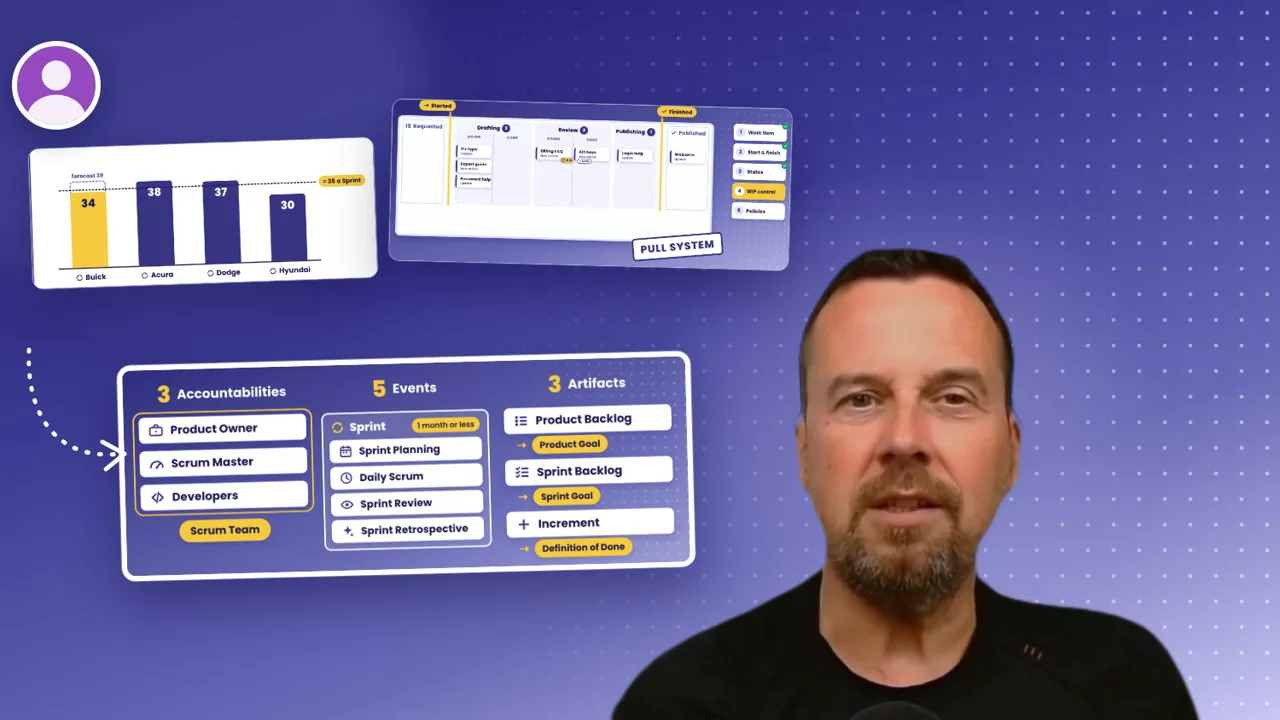
Course Highlights
One Team, from Plan to Launch
Follow Murcs Inc. as it builds its online store with Scrum, then runs it with Kanban after launch.
Straight from the Official Guides
The 2020 Scrum Guide, the Kanban Guide for Scrum Teams and the Agile Manifesto, and where common practice differs.
Agile Values and Principles
The Manifesto's four values and twelve principles, and when Agile fits simple, complicated and complex work.
The Scrum Team
What the Product Owner, the Scrum Master and the Developers are each accountable for.
Every Scrum Event and Artifact
Plan, run, review and improve Sprints, with the Product Goal, Sprint Goal and Definition of Done.
Tracking and Forecasting
Velocity, burndowns and burnups, and how to forecast without turning them into promises.
Kanban and Flow
Design a board, limit work in progress, and use throughput, cycle time, work item age and SLEs.
Scrum and Kanban Together
Compare them side by side, and see what Kanban inside Scrum, and "Scrumban", really means.
PSM I and PSK I Exam Prep
Study plans for both exams and short exam notes that point out the details the exams like to test.
Six Timed Practice Exams
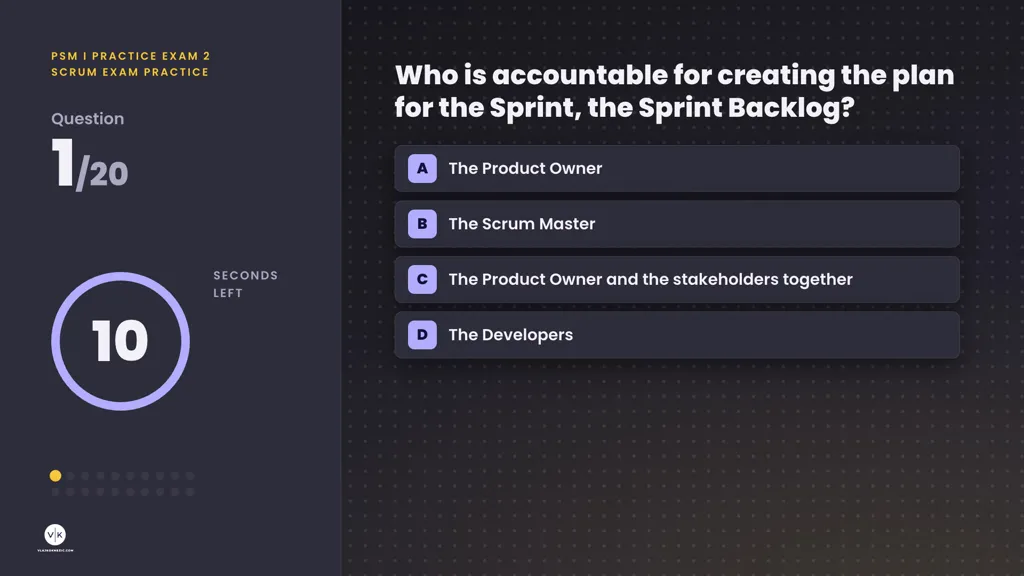
Four for PSM I and two for PSK I, 20 questions each, with every answer explained.
Course Trailer
Course Content
Agile Foundations
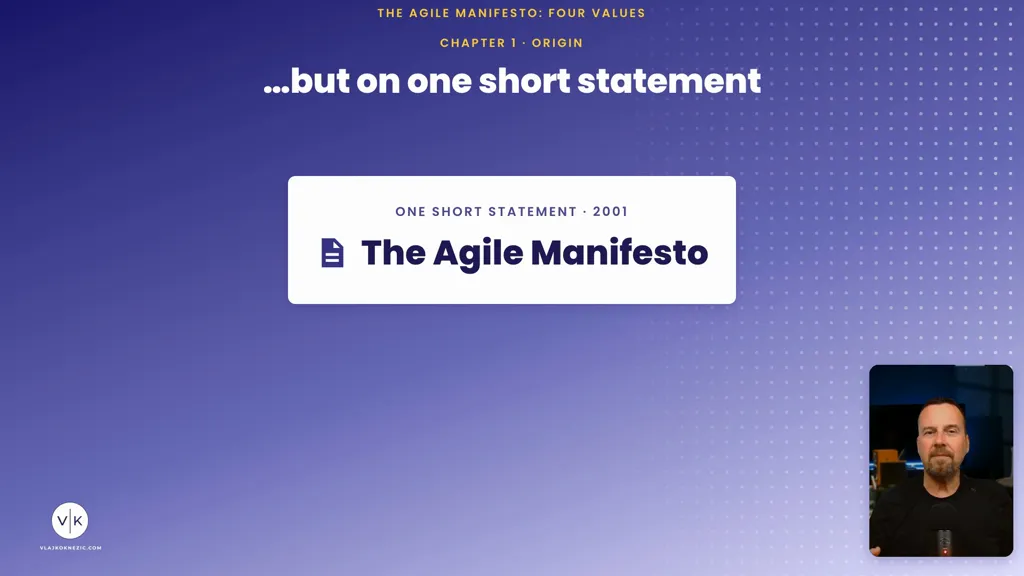
Why do big upfront plans so often fail on complex work? You start with that question, then learn the Agile Manifesto’s four values and twelve principles, and the difference between doing Agile and being agile.
You also sort work into simple, complicated and complex, and put Scrum, Kanban, XP, Lean and the scaling frameworks on one map.
Scrum Foundations
Scrum, exactly as the 2020 Scrum Guide defines it: the definition unpacked phrase by phrase, empiricism and lean thinking, what iterative and incremental really mean, the three pillars and the five Scrum values, and then the whole framework on one page.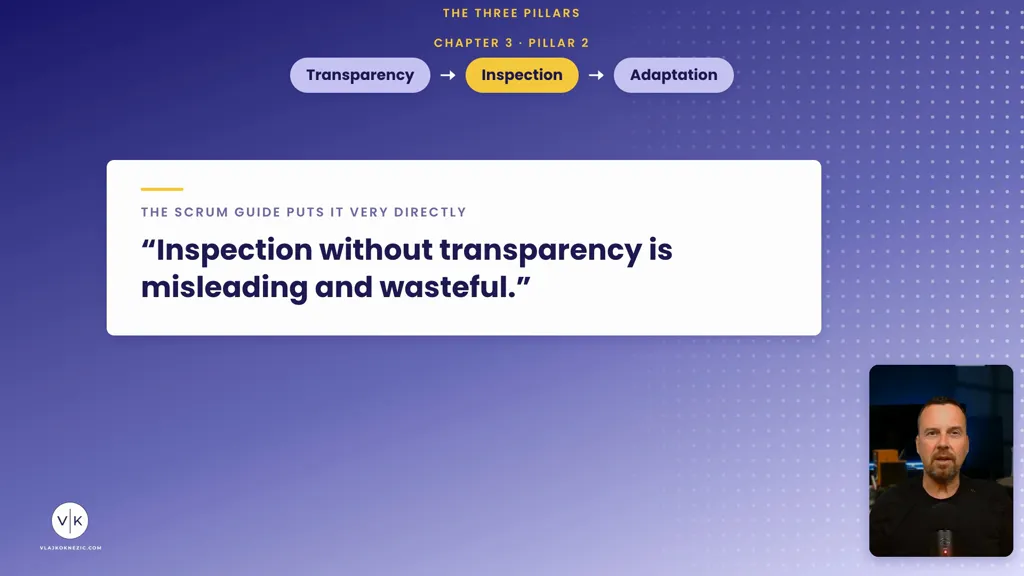
The Scrum Team
What the Product Owner, the Scrum Master and the Developers are each accountable for, and why the Scrum Team is small, cross-functional and self-managing. Then you meet the Murcs Scrum Team and its stakeholders, the people you follow for the rest of the course.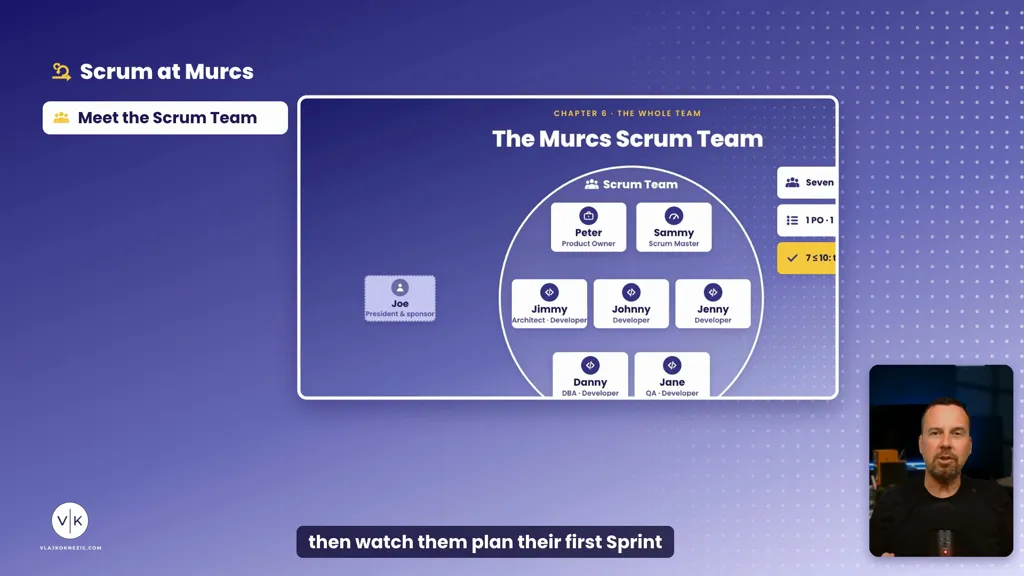
Scrum in Action at Murcs
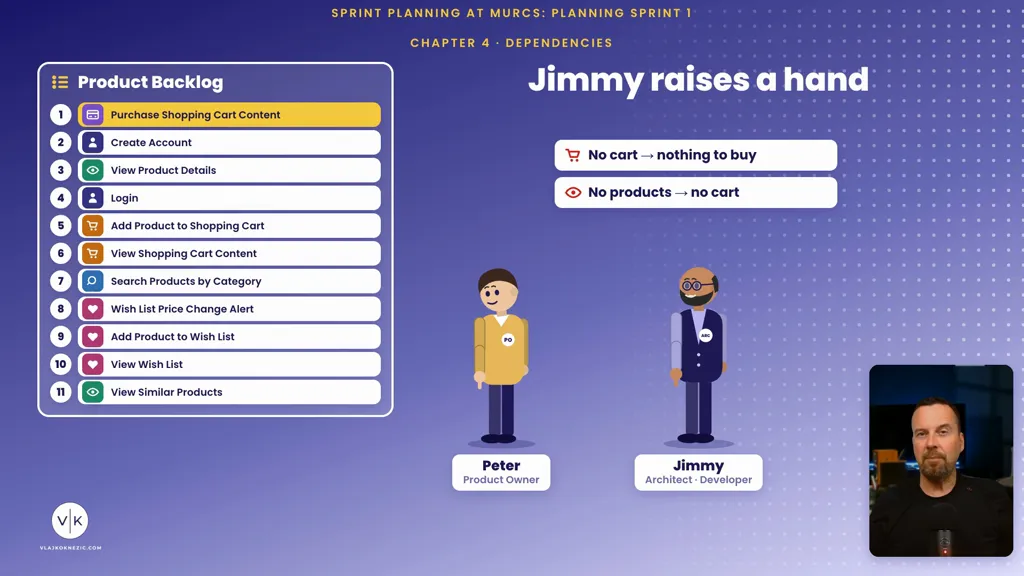
The biggest part of the course. One event and artifact at a time, Murcs builds its store: the Product Backlog and Product Goal, refinement and estimation, Sprint Planning for Sprint 1, the Daily Scrum, the Increment and the Definition of Done, the Sprint Review, the Retrospective, and going live.
Then Scrum in the real world: common myths and anti-patterns, tracking progress with velocity and burndowns, and scaling Scrum to many teams.
Kanban
Kanban from Toyota to knowledge work: flow, pull and continuous improvement. You design a Kanban board, limit work in progress, and measure flow with throughput, cycle time and work item age, then forecast with service level expectations, as the Kanban Guide for Scrum Teams describes. Murcs runs its store with Kanban after launch.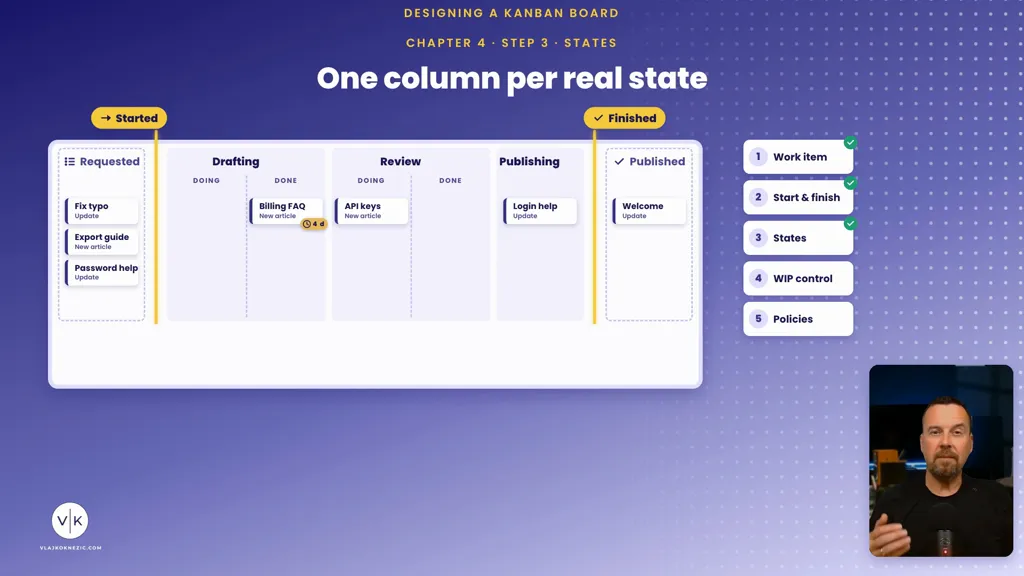
Scrum and Kanban Together
Scrum and Kanban side by side, from cadence to commitments. Then how a Scrum Team can use Kanban inside its Sprints, and what “Scrumban” really means.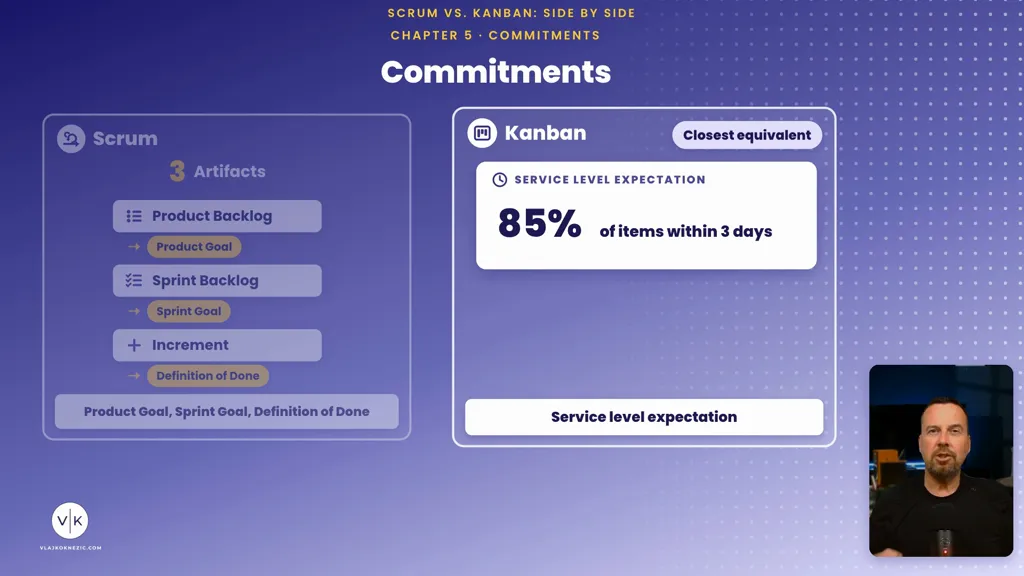
Certifications and Practice Exams
An honest map of the certifications (PSM, CSM, PMI-ACP, SAFe and the Kanban certificates) and a study plan for each of the PSM I and PSK I exams.
Then six timed practice exams, four for PSM I and two for PSK I, 120 questions in all, each answer explained.
Course Lessons
Section 1 — Welcome
- Lesson 1 - Welcome: What You'll Learn and How This Course Works (2:46 min)
- Lesson 2 - Meet Murcs Inc.: Our Course Project (2:48 min)
Section 2 — Agile Foundations
- Lesson 3 - Why Agile? The Problem with Big Upfront Plans (3:59 min)
- Lesson 4 - The Agile Manifesto - Four Values (5:54 min)
- Lesson 5 - The Twelve Agile Principles (6:21 min)
- Lesson 6 - Agile Is a Mindset, Not a Method (3:48 min)
- Lesson 7 - When Agile Fits: Simple, Complicated and Complex Work (3:09 min)
- Lesson 8 - The Agile Landscape: Scrum, Kanban, XP, Lean and Scaling Frameworks (3:54 min)
Section 3 — Scrum Foundations
- Lesson 9 - What Is Scrum - The Definition Unpacked (4:51 min)
- Lesson 10 - Scrum Theory - Empiricism and Lean Thinking (4:49 min)
- Lesson 11 - Iterative and Incremental (4:48 min)
- Lesson 12 - The Three Pillars (4:59 min)
- Lesson 13 - The Five Scrum Values (5:02 min)
- Lesson 14 - Scrum at a Glance (4:00 min)
Section 4 — The Scrum Team
- Lesson 15 - The Scrum Team (4:04 min)
- Lesson 16 - The Product Owner (4:42 min)
- Lesson 17 - The Developers (4:13 min)
- Lesson 18 - The Scrum Master (4:59 min)
- Lesson 19 - The Murcs Scrum Team and Its Stakeholders (3:03 min)
Section 5 — Scrum in Action: Events and Artifacts at Murcs
- Lesson 20 - Why Scrum Has Events (3:34 min)
- Lesson 21 - The Product Backlog and the Product Goal (6:26 min)
- Lesson 22 - Refining the Backlog: User Stories and Estimation (4:59 min)
- Lesson 23 - The Sprint: The Heartbeat of Scrum (4:00 min)
- Lesson 24 - Sprint Planning: Why, What and How (4:47 min)
- Lesson 25 - Sprint Planning at Murcs: Planning Sprint 1 (6:43 min)
- Lesson 26 - The Sprint Backlog and the Sprint Goal (4:58 min)
- Lesson 27 - The Daily Scrum (5:19 min)
- Lesson 28 - The Increment and the Definition of Done (4:10 min)
- Lesson 29 - The Sprint Review: Murcs Shows Its First Increment (4:14 min)
- Lesson 30 - The Sprint Retrospective: Murcs Looks Back (4:18 min)
- Lesson 31 - Sprint 2 and Beyond: Murcs Goes Live (4:23 min)
Section 6 — Scrum in the Real World
- Lesson 32 - Common Scrum Myths and Anti-Patterns (4:15 min)
- Lesson 33 - Tracking Progress: Velocity, Burndowns and Forecasting (3:53 min)
- Lesson 34 - Scaling Scrum: Many Teams, One Product (4:02 min)
Section 7 — Kanban
- Lesson 35 - What Is Kanban? From Toyota to Knowledge Work (3:41 min)
- Lesson 36 - Kanban's Core Ideas: Flow, Pull and Continuous Improvement (4:35 min)
- Lesson 37 - Designing a Kanban Board (3:47 min)
- Lesson 38 - Limiting Work in Progress: Stop Starting, Start Finishing (3:26 min)
- Lesson 39 - Flow Metrics: WIP, Throughput, Cycle Time and Work Item Age (4:00 min)
- Lesson 40 - Service Level Expectations and Forecasting in Kanban (3:04 min)
- Lesson 41 - Kanban at Murcs: Running the Store After Launch (3:37 min)
Section 8 — Scrum and Kanban Together
- Lesson 42 - Scrum vs. Kanban: Side by Side (3:37 min)
- Lesson 43 - Kanban Inside Scrum (and What "Scrumban" Really Means) (3:48 min)
Section 9 — Certifications
- Lesson 44 - The Certification Landscape: PSM, CSM, PMI-ACP, SAFe and Kanban Certificates (3:54 min)
- Lesson 45 - How to Prepare for the PSM I Exam (3:34 min)
- Lesson 46 - How to Prepare for the PSK I Exam (3:49 min)
Section 10 — PSM I and PSK I Practice Exams
- Lesson 47 - PSM I Practice Exam 1 (13:54 min)
- Lesson 48 - PSM I Practice Exam 2 (14:24 min)
- Lesson 49 - PSM I Practice Exam 3 (13:21 min)
- Lesson 50 - PSM I Practice Exam 4 (15:07 min)
- Lesson 51 - PSK I Practice Exam 1 (14:34 min)
- Lesson 52 - PSK I Practice Exam 2 (14:08 min)
Section 11 — Wrap-Up
- Lesson 53 - Course Recap and Your Next Steps (2:59 min)
Course Instructor
Vlajko Knezic
As a seasoned 20+ year career technologist, Vlajko has led high-performance teams, ranging from technology infrastructure engineering design & support to web development teams and product development groups.
Vlajko's career has spanned experiences as a developer, project manager, product manager, technology director, agile evangelist, and methodology leader.
He has helped many organizations improve the efficiency of their delivery by using the right tools and processes, and that knowledge and experience are reflected in his courses.
Frequently Asked Questions
Who is this course for?
Beginners who want to understand Agile, Scrum and Kanban properly, people who already work on an "Agile" team and want to know which practices are real Scrum and which are habit, aspiring Scrum Masters and Product Owners preparing for the PSM I or PSK I exam, and project managers, team leads and developers moving to Scrum or Kanban.
Do I need any experience or software?
No. The course starts from the basics, and everything is explained with animations and a running example, so you don't need Jira or any other tool. A printer is handy for the practice exams' answer sheets, but paper and a pen work too.
Will this course prepare me for the PSM I and PSK I exams?
It covers what both exams test: the 2020 Scrum Guide for PSM I and the Kanban Guide for Scrum Teams for PSK I. You get a study plan for each exam, exam notes throughout the lessons, and six timed practice exams with 120 questions, every answer explained. The exams themselves are booked and paid for separately.
How do the practice exams work?
Each one is a video with 20 questions. You mark your answer on a printable answer sheet while a timer counts down, then hear the correct answer and why. Four exams practise for PSM I and two for PSK I, and no question is repeated across them.
Is this course affiliated with Scrum.org?
No. This course and its practice exams are independent and are not affiliated with or endorsed by Scrum.org or any other certification body or Kanban organization.
How is this different from your Jira courses?
This course teaches the ways of working: Agile, Scrum and Kanban themselves, with no software. The Jira courses show how to run them in Jira. Both follow the same online-store project, so they work well together in either order.